
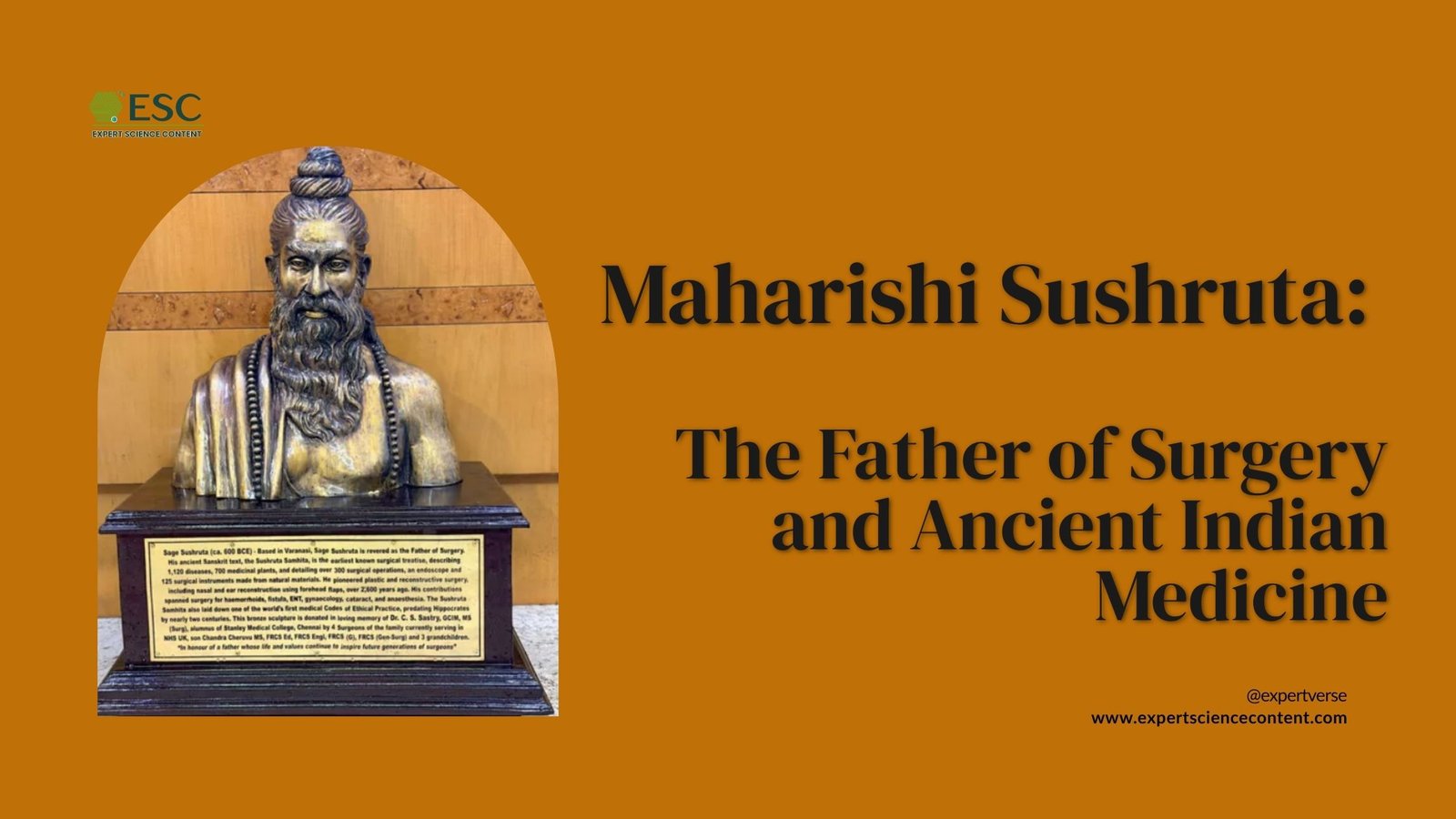
 Long before the advent of sterile operating theaters, modern anesthesia, or mechanized life support, a visionary in ancient India was already executing complex anatomical reconstructions. Operating along the banks of the Ganges in Varanasi around 600 BCE, Maharishi Sushruta transformed medicine from speculative philosophy into an exact, empirical science. Widely revered today as the undisputed father of surgery, Sushruta belonged to a rich heritage of learned scholars who fused deep biological observation with precise manual artistry. At a time when European medicine was still centuries away from understanding systemic anatomy, this Indian pioneer was lecturing students on human dissection, mapping fractures, and designing specialized steel tools to alter living tissue. Sushruta’s work laid the groundwork for modern plastic surgery and clinical protocols. By introducing targeted herbal anesthetics, botanical therapies, and systematic postoperative care, he defined the core parameters of early surgical science, remaining a foundational pillar in medical history.
Recently, a majestic bronze statue was proudly unveiled at the Royal College of Surgeons of Edinburgh in the UK, anchoring a global tribute to a master whose ancient incisions carved the very path toward modern human healing.
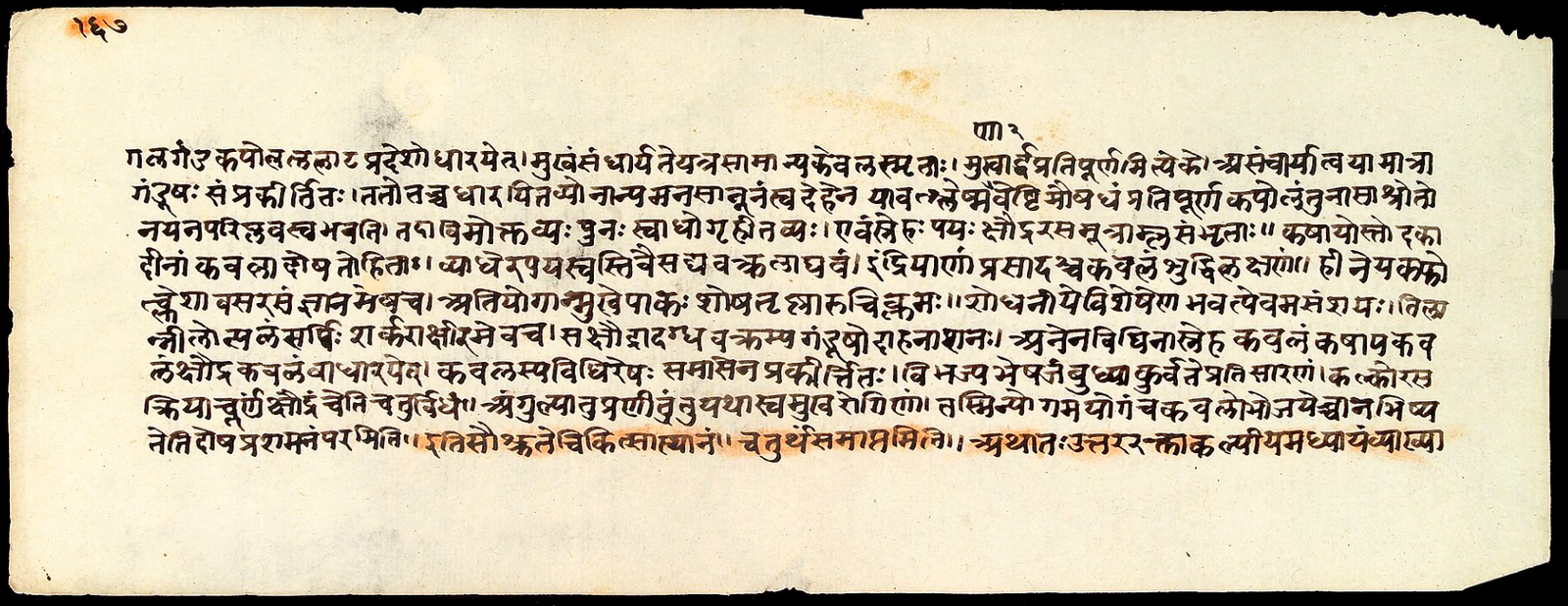
A palm-leaf manuscript preserved at the Kaiser Library, Nepal, dated to 878 AD- The oldest surviving manuscript of the Suśruta Saṃhitā. Source: wikipedia
At the heart of his monumental legacy lies the Sushruta Samhita (Sushruta’s Compendium), an encyclopedic treatise of 186 chapters that serves as a foundational pillar of Ayurveda. While the text comprehensively addresses general medicine, embryology, toxicology, and pediatrics, its highly advanced chapters on operative surgery fundamentally set it apart. Sushruta’s holistic methodology encompassed an extensive range of specialized fields—spanning general surgery (Shalya Tantra), anatomy, obstetrics and gynecology, ophthalmology, orthopedics, traumatology, and pharmacology. Far from being isolated practices of his era, these teachings established a systemic foundation that revolutionized ancient medicine and continues to echo across modern clinical practices worldwide.
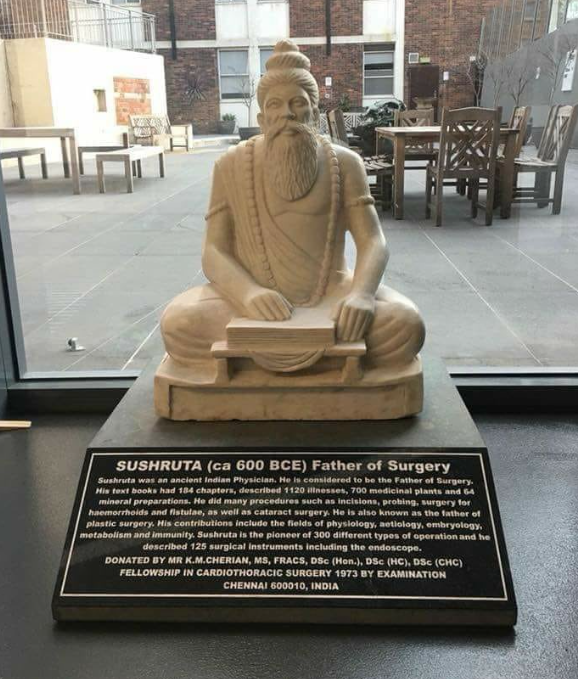 His seminal work reflects a profound mastery of human anatomy, cataloging over 120 meticulous surgical instruments, ranging from fine forceps and speculums to highly specialized scalpels—and detailing more than 300 unique operative procedures.
Among these ancient medical innovations, his most extraordinary achievement was pioneering the forehead rhinoplasty flap to reconstruct noses served as legal punishments. By meticulously dissecting a flap of living skin from the forehead and rotating it while keeping the vital blood supply intact, he created a pedicle flap technique that remains a gold standard in modern reconstructive plastic surgery to this day.
Furthermore, as a true pioneer of modern medicine, Maharishi Sushruta advanced the critical art of wound closure. He introduced structural stability to wound healing through the art of suturing, utilizing diverse materials such as tensile horsehair, leather threads, and natural plant fibers. Each procedure, instrument, and the necessary postoperative care protocol was meticulously documented to minimize infection and facilitate optimal tissue alignment. By introducing targeted herbal anesthetics, botanical therapies, and systematic recovery management, he defined the core parameters of holistic surgical success, remaining an eternal, foundational pillar in the evolution of global medical history.
The modern medical fraternity has increasingly looked back to the roots of its discipline, leading to a profound global revival of interest in Maharishi Sushruta. No longer confined to regional history, his pioneering genius is permanently etched into the architecture of elite medical institutions worldwide. Renowned universities across Australia and the United Kingdom have erected monuments to honor his peerless contributions.
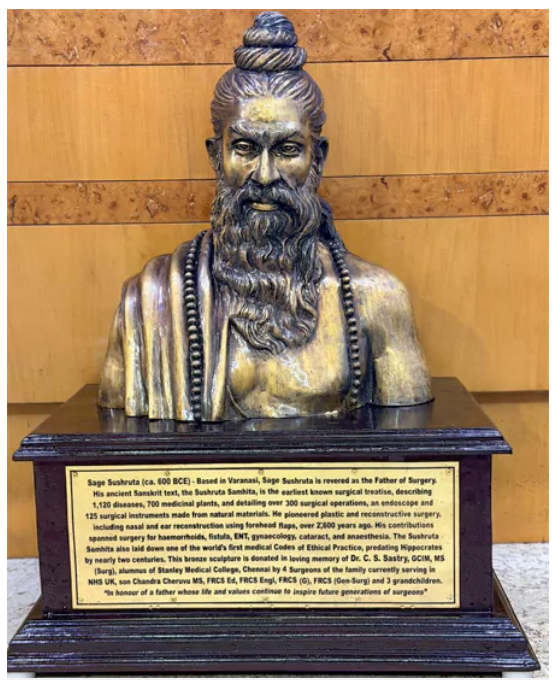
The statue of Maharishi Sushruta was donated by ‘Cheruvu Family Foundation,’ at Royal College Of Surgeons Of Edinburgh
Most notably, the recent majestic bronze statue of the father of surgery unveiled at the Royal College of Surgeons of Edinburgh in the UK. Standing as a silent, powerful guardian of clinical excellence, this monument serves as a bridge across millennia. It reminds global practitioners that the sharp steel tools, ethical codes, and flap reconstructions utilized daily in the 21st century were conceived over 2,600 years ago by a sage in a simple wrap robe. This global recognition stands not merely as historical documentation, but as a living tribute to a master whose ancient incisions carved the very path toward modern human healing.
Read More:

5 Responses