World Blood Donor Day 2026: The Science and Soul of Blood Donation
- Published By: Dr. Anindita Talukdar
- Published On: June 13, 2026
- 3 Minutes to read
Every few seconds, an invisible lifeline connects two strangers. One sits in a clinic chair, arm extended; the other lies in an emergency room or a critical care unit, fighting for time. Blood cannot be synthesized in a laboratory; it is a precious fluid that only the human body can manufacture and only human empathy can share.
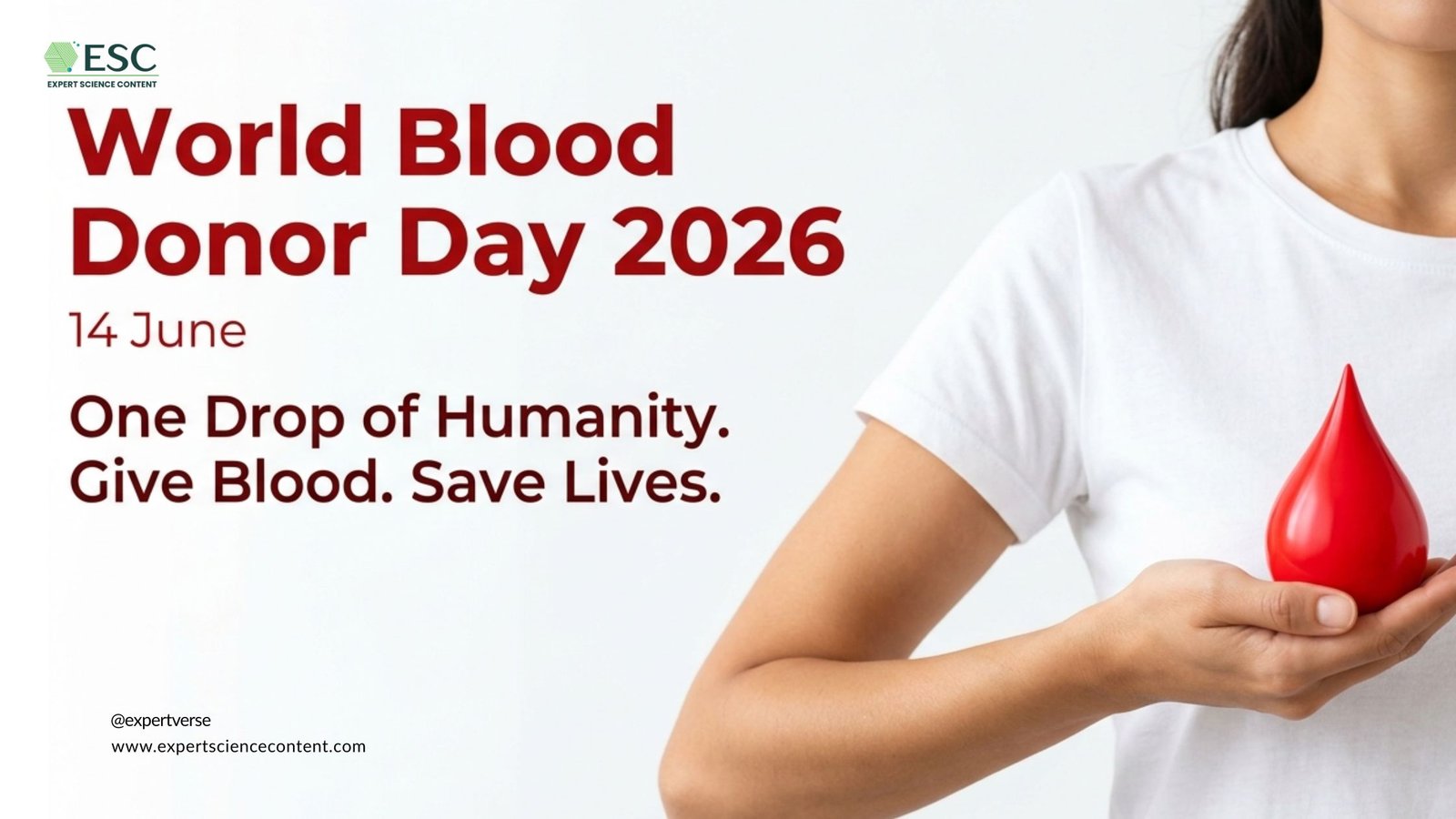
As we observe world blood donor day on 14 June 2026, the global medical community shines a spotlight on an eternal truth: blood donation is not merely a clinical procedure, it is an act of profound human solidarity. This year’s global campaign directive puts it beautifully: “One Drop of Humanity. Give Blood. Save Lives.”
Why June 14? The Historic Blueprint
World Blood Donor Day is observed on June 14 every year to commemorate the birth anniversary of Dr. Karl Landsteiner. The Austrian physician discovered the ABO blood group system in 1901, a landmark breakthrough that transformed blood transfusion from a high-risk gamble into a life-saving science, earning him the Nobel Prize. Officially established by the World Health Organization (WHO) in 2004, this global awareness day is now celebrated across more than 190 countries.
The Critical Blueprint: Why Every Drop Counts

From a physiological standpoint, blood is a complex liquid tissue transporting oxygen, nutrients, and immunological defenses. When a single individual donates one unit of whole blood (approximately 350–450 mL), it can be separated into its component parts: packed red blood cells, plasma, and platelets. Consequently, a single donation can save up to three distinct lives—ranging from severe trauma patients and surgical candidates to individuals managing chronic hematological malignancies.
Aligned closely with the WHO 2026 campaign theme—“Giving blood is an act of solidarity. Join the effort and save lives.”—the global benchmarks for blood donation day 2026 focus on:
- Sustained Voluntary Growth: Shifting national frameworks away from sporadic emergency donations toward systematic, regular, and unpaid voluntary donations.
- Universal Access Security: Encourage governments by driving legislative and public health investments to fortify national blood networks, ensuring safe transfusions are available to everyone, everywhere.
- Broad-Spectrum Awareness: Highlighting the physiological and societal necessity of both whole blood and plasma resources.

Who Can Donate? Eligibility and Frequency
Maintaining a safe, robust blood pipeline relies entirely on healthy citizens stepping forward. Most healthy adults between 18 and 65 years of age, weighing at least 50 kilograms, and in general good health are eligible to donate.
The biological recovery timeline dictates donation frequency safely: men can donate every 90 days, while women can donate every 120 days. This means a single committed donor can contribute three to four times a year. Because whole blood is routinely processed into distinct components, that single individual can potentially touch and save 9 to 12 lives annually with each visit.
Dismantling the Biases: Myths vs. Scientific Facts
Despite advanced medical progress, systemic misconceptions frequently impede public participation. Active BloodDonationAwareness requires replacing deep-rooted myths with rigorous scientific reality:
- Myth: “Donating blood depletes the body’s volume permanently and triggers physical weakness.”
Scientific Fact: The human body holds roughly 5 liters of blood. The fluid volume lost during donation is fully replenished within 24–48 hours via fluid intake, while red blood cells completely regenerate within 4 to 8 weeks through natural bone marrow hematopoiesis. - Myth: “The extraction process introduces a high risk of blood-borne infections to the donor.”
Scientific Fact: The entire procedure is rigorously sterile. Medical personnel utilize strictly single-use, specialized, vacuum-sealed needles and collection kits, rendering the acquisition of an infectious pathogen scientifically impossible for the donor.
The Catalyst of Change: Collective Awareness
At ExpertVerse, we recognize that bridging the gap between scientific truth and community action is essential for societal progress. Scientific awareness is the ultimate antidote to supply shortages. When communities realize that blood components have a finite shelf-life—platelets last a mere 5 to 7 days—it becomes clear that continuous, voluntary participation is vital.
By championing the campaign goals of 2026, we can turn awareness into tangible action. Safe blood is a fundamental human right. Let us stand in absolute solidarity, celebrate the voluntary donors who preserve our collective health, and step forward to offer our own drop of humanity.
#WorldBloodDonorDay #OneDropOfHumanity
Official Campaign Source: World Health Organization WBDD 2026
Dr. Anindita Talukdar
The creative behind ESC sharing smart actionable tips and insights to level up writing and research skill.
Join ESC
Get our newsletter
Dr. Anindita Talukdar
The creative behind ESC sharing smart actionable tips and insights to level up writing and research skill.